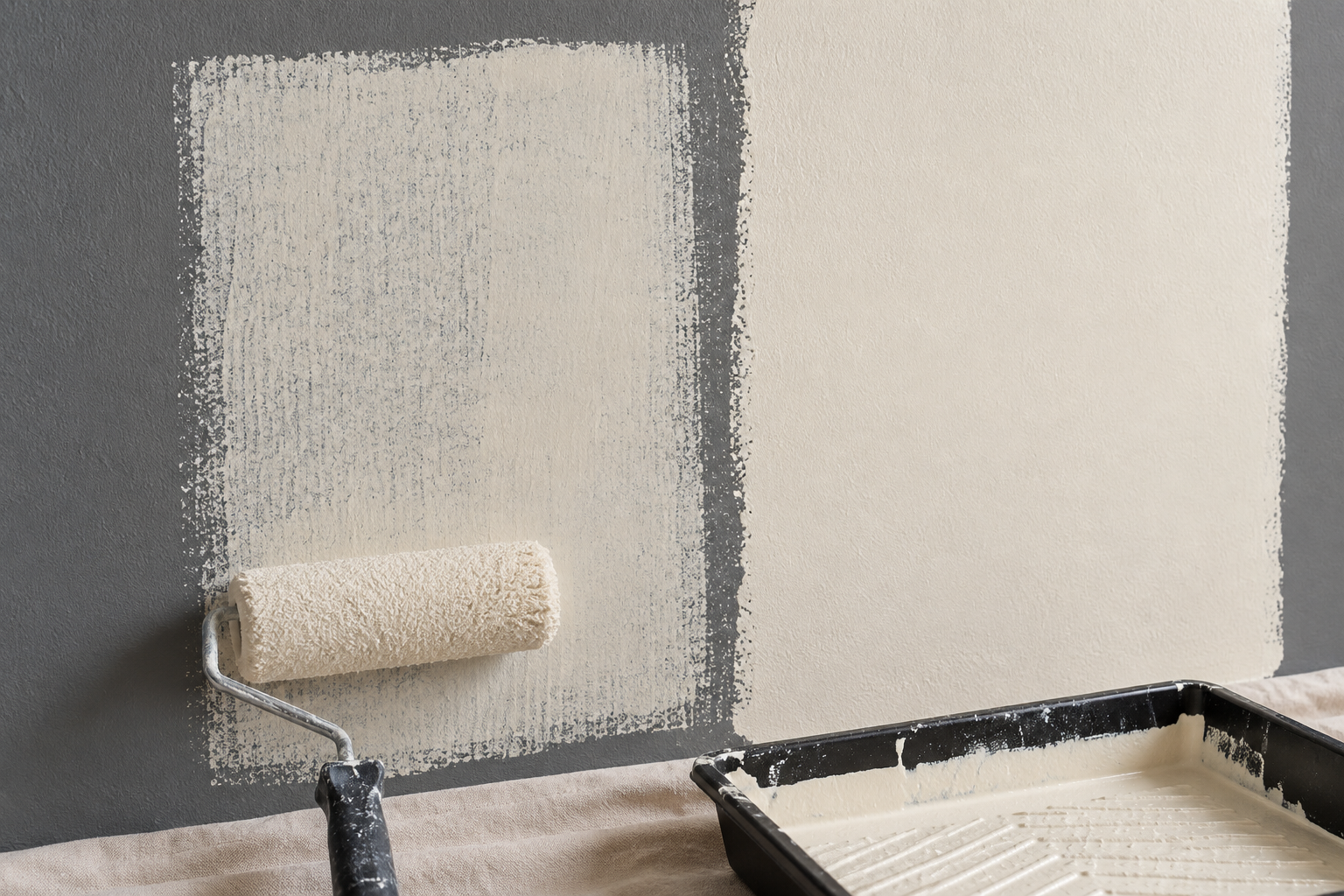
Two coats are common for achieving an even finish, but the exact number depends on surface condition, paint coverage and the amount of color change.
Major changes from dark to light or vice versa can require additional coverage.
Primer is not a finish coat; its role is to prepare the surface. Follow the product’s technical recommendations.
Determine the coat count
Start with the product's technical instructions. Contrast between old and new colors, absorption and applied thickness affect the result. Primer is not a replacement for a finish coat. Even if one coat looks opaque, the specified coat count and film thickness still matter.
Assess the dry result
Examine the entire dried surface under consistent light. If old color shows or sheen is uneven, distinguish thin application from preparation or absorption problems. One unusually thick coat can cause runs and slow drying. Use the label's recoating interval for the next coat.
A short work checklist
- Match tools and application conditions to the product instructions.
- Prepare enough paint for the complete surface.
- Judge the result after the required drying period, not while wet.
Will the second coat change the color?
If the underlying shade shows through a thin film, another correctly applied coat may reveal the intended color more accurately. With complete coverage, assess light and sheen separately. Follow the specified coat count.