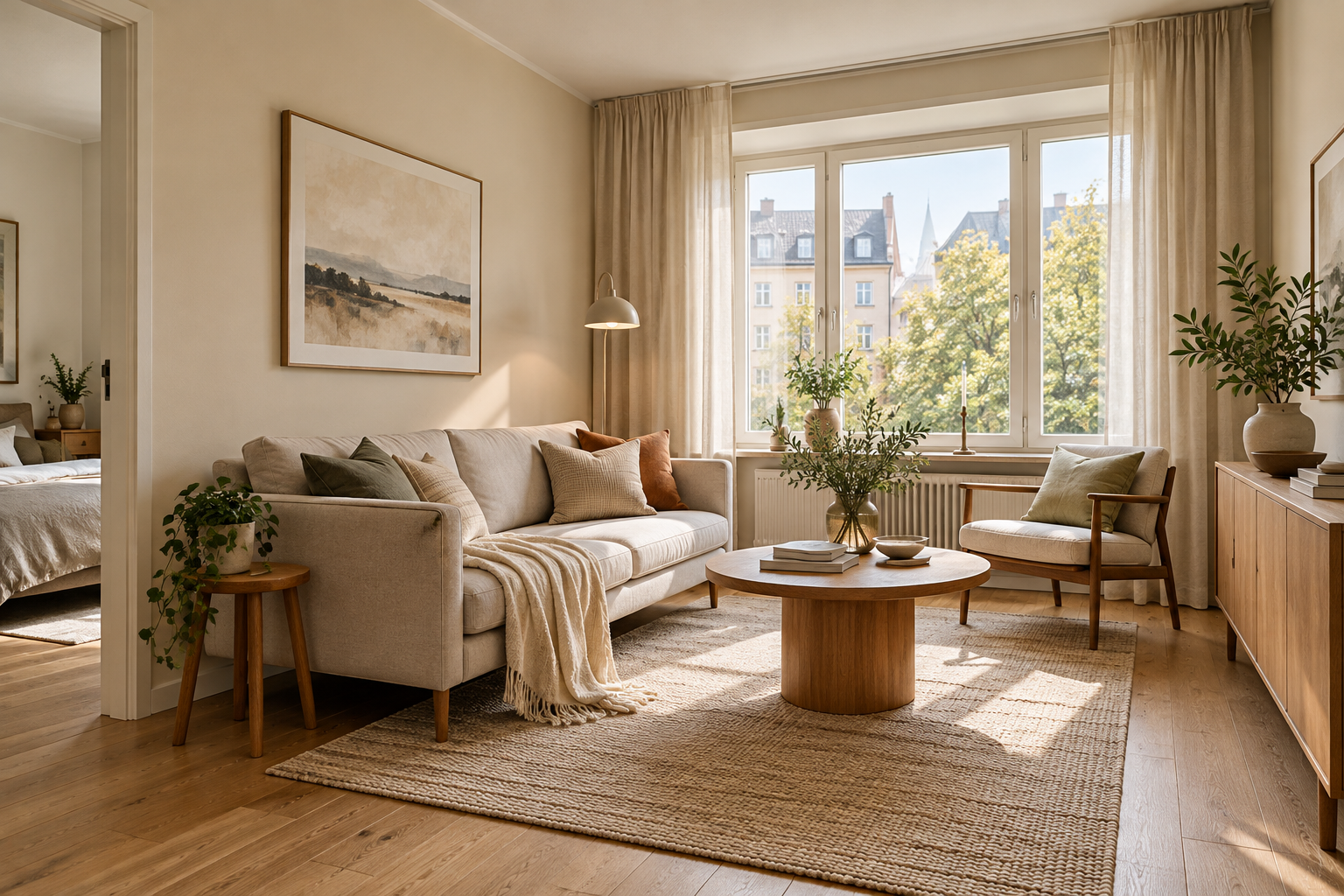
Light and soft shades can make a small room feel brighter and more open. White, cream, light beige, soft gray, pale green and light blue are common choices.
White is not the only option; the wall color should work with natural light, flooring and furniture.
A slightly lighter ceiling and a restrained palette can make the room feel calmer and more spacious.
Narrow the choice
Start with elements that will remain: flooring, doors and large furniture. Limit the wall shortlist to three colors that work with them. Lower contrast between ceiling and walls can create continuity, but a dark shade can also make a small room feel comfortable. Choose for the light and purpose of the room, not its dimensions alone.
Where to test
Place each candidate near the window and in the darkest corner. Examine it in the morning, evening and under the lamps. In a dim bedroom, for example, a cool white can appear grayer than expected. Painting the entire room from a tiny swatch and adding several strong accent colors at once are common mistakes.
Before deciding
- Assess the shade in the actual room under its intended lighting.
- Compare flooring, furniture and textiles beside the sample.
- Record product, color code and sheen together.
Should I avoid dark colors?
No. A dark shade can create an intentional accent or a calm continuous palette. Test it in the room light and consider large furniture contrasts rather than excluding it solely because the room is small.