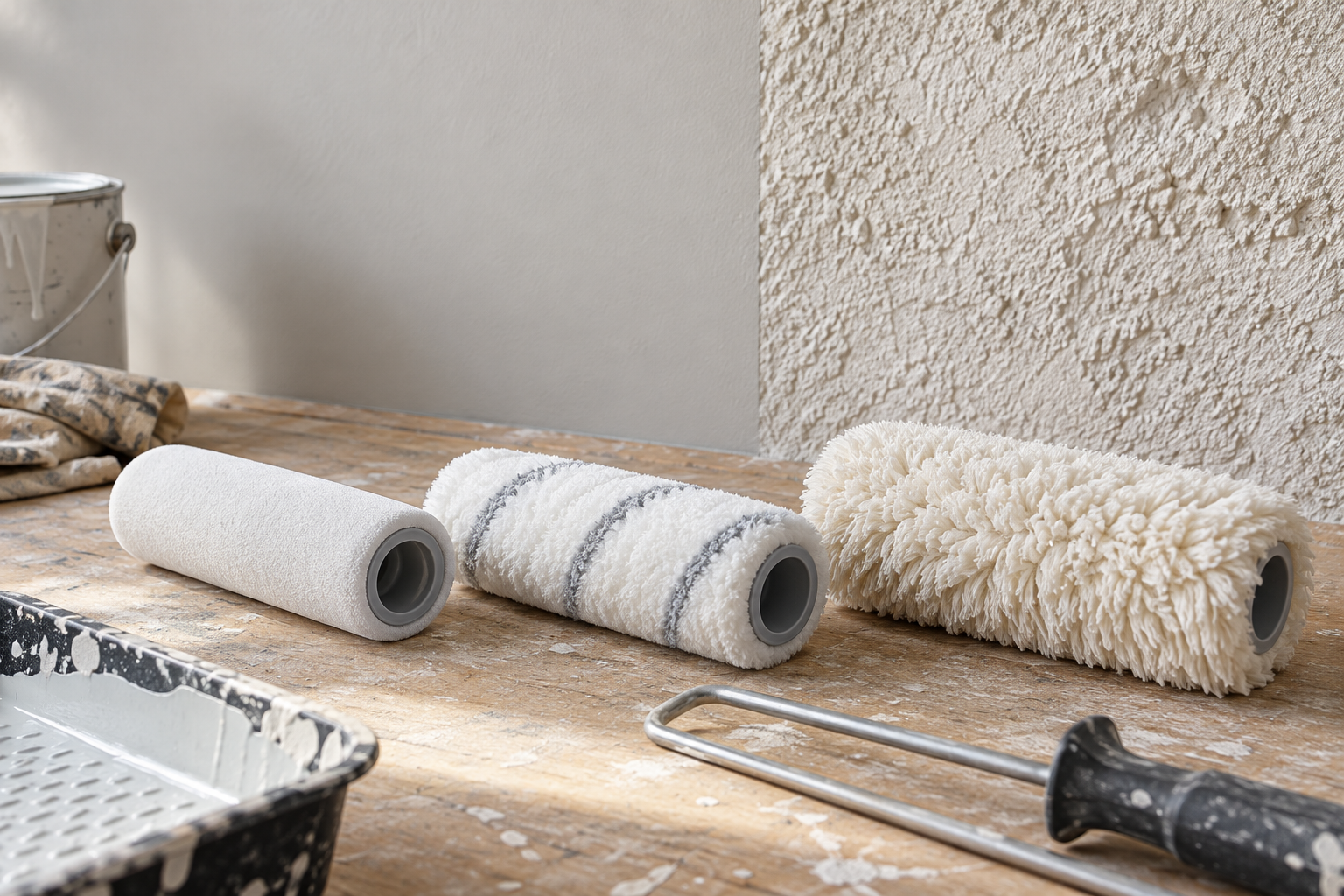
Short or medium nap rollers usually work well on smooth walls, while rougher surfaces benefit from a longer nap.
A very long nap can add unwanted texture on smooth walls, while a short nap may not reach recesses on rough surfaces.
The roller material should also be compatible with the paint being used.
Match surface and paint
Smooth walls, rough plaster and textured facades do not necessarily suit the same roller. Select nap length and material using the coating manufacturer's recommendation. A longer nap reaches rough areas but may leave more texture on smooth walls; a short nap may miss deep recesses.
Before starting
Choose a roller size you can control and check for loose fibers. Evaluate distribution and texture on a small trial area. Keep a separate tool for corners. Expecting premium paint to compensate for an unsuitable roller, or switching coatings without properly cleaning the tool, undermines the result.
A short work checklist
- Match tools and application conditions to the product instructions.
- Prepare enough paint for the complete surface.
- Judge the result after the required drying period, not while wet.
What if the roller sheds fibers?
Stop and inspect the tool. Remove trapped fibers and correct the surface at an appropriate stage. Continuing with a shedding roller creates additional smoothing work later.