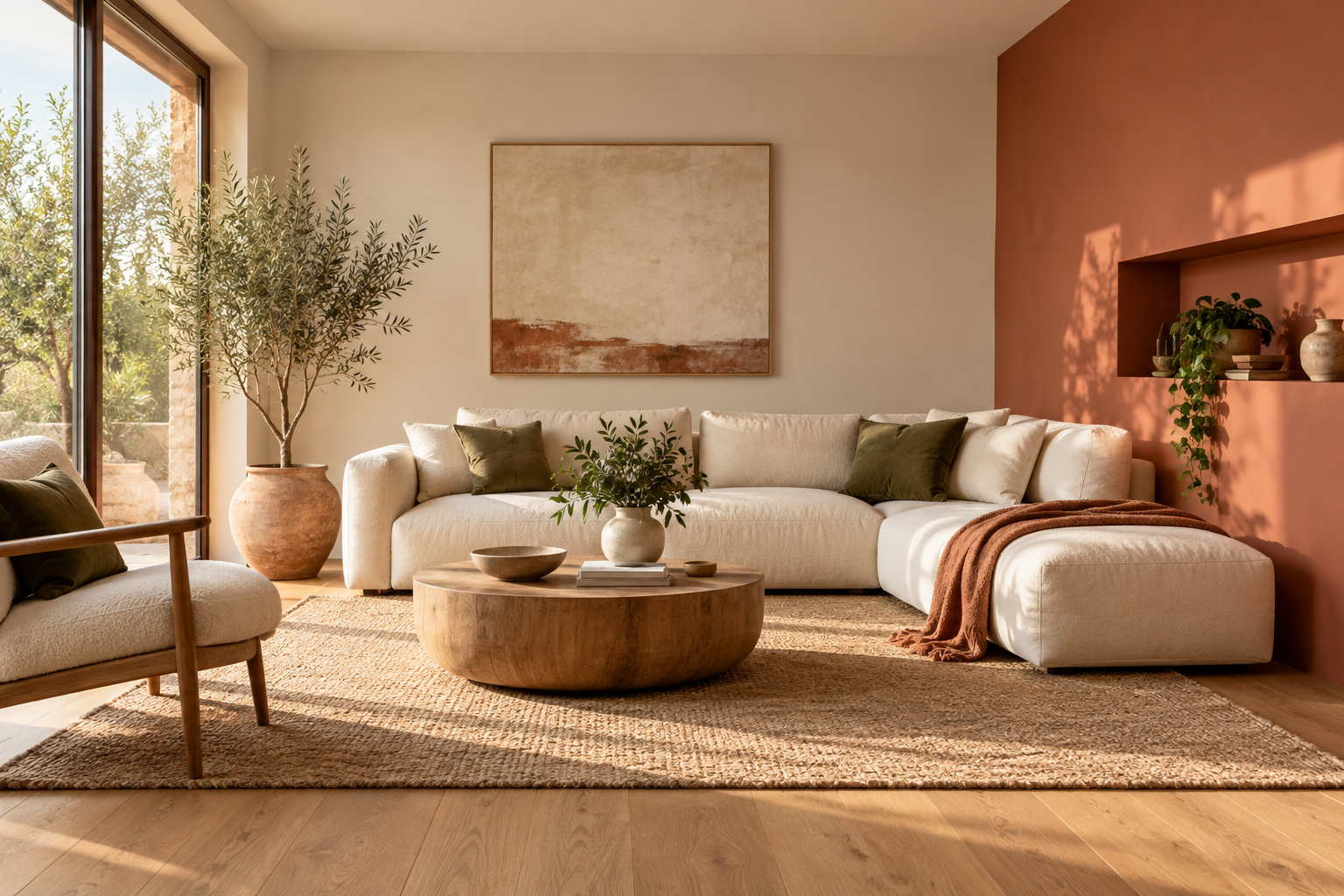
A simple approach is to choose one main color, one supporting shade and, if needed, one accent.
Use the main color on larger surfaces, the second on furniture or an accent wall, and the third in smaller details.
Flooring, doors and large furniture should also be treated as part of the overall palette.
Give each color a role
Choose a main color, a supporting shade and a small accent. Decide which surfaces receive each: all walls, one feature wall or textiles. They do not need equal areas. Include the existing furniture and floor colors in the palette rather than treating the walls in isolation.
Plan the boundaries
Measure the line where two paints meet before applying them. For a darker green lower section and a light upper section, compare the proposed line with furniture and door hardware. Numerous small color blocks can make the room feel fragmented. Apply masking tape only to a suitable dry surface and remove it according to the tape instructions.
Before deciding
- Assess the shade in the actual room under its intended lighting.
- Compare flooring, furniture and textiles beside the sample.
- Record product, color code and sheen together.
Must I buy three paint colors?
No. The third color can come from curtains, a rug or small accessories. Treating existing materials as part of the palette reduces both the number of decisions and unnecessary visual clutter.