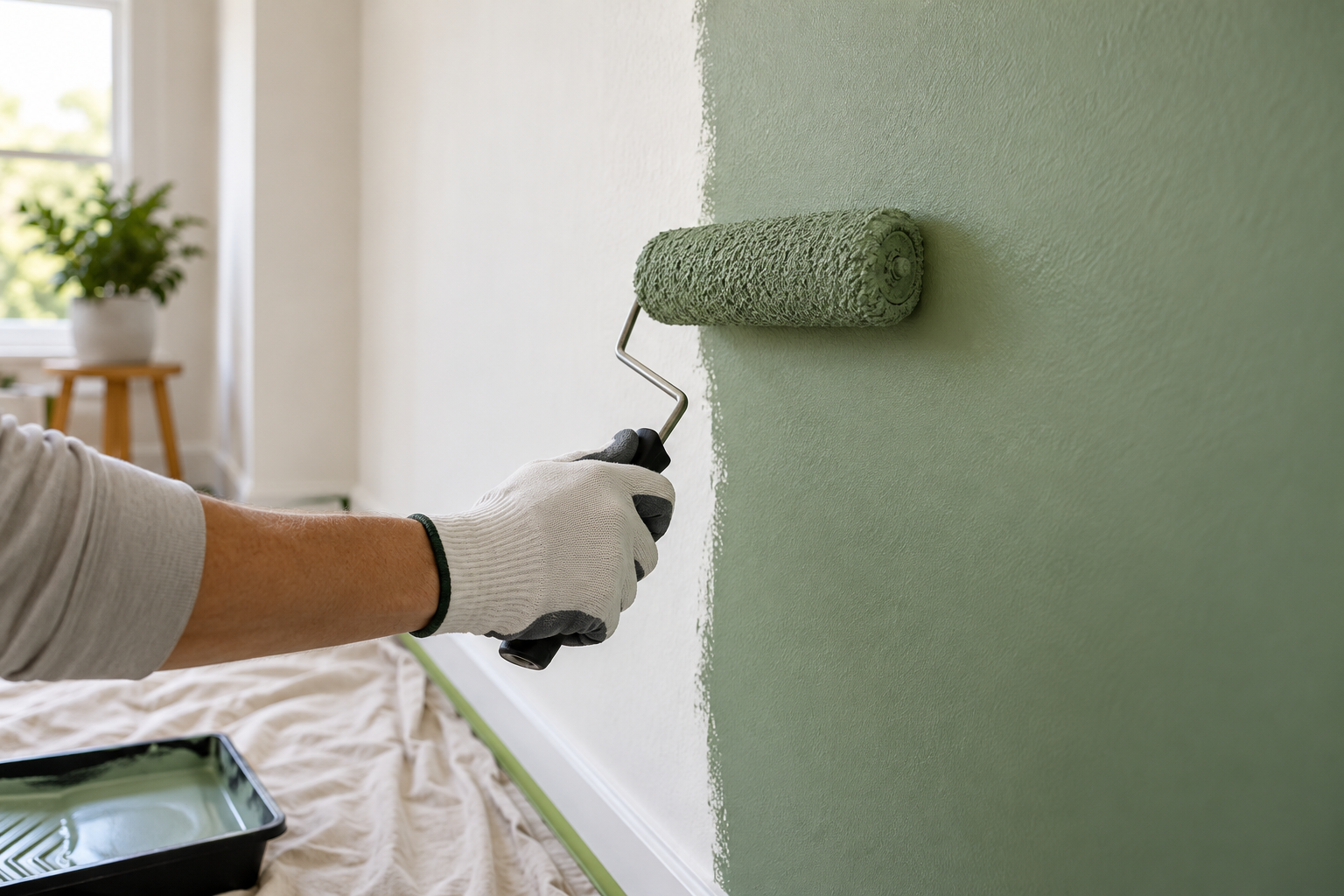
Load the roller evenly without overloading it. Work in manageable sections and maintain a wet edge.
Rolling back over partly dried paint or using excessive pressure can leave visible marks.
The right roller, consistent pressure and finishing passes in one direction help create a more even surface.
Plan the roller work
Choose the right roller and load it evenly. Work in manageable areas while maintaining a wet edge between them. Do not press hard to squeeze the last paint from the roller. Returning repeatedly to partially dried areas can increase marks.
If marks remain
Inspect the fully dried wall under side light. If the defect is a color or sheen difference, correct the cause and consider recoating the whole wall from corner to corner. Raised physical ridges need smoothing first. Do not try to hide the problem by excessive thinning; check conditions, absorption and the tool separately.
A short work checklist
- Match tools and application conditions to the product instructions.
- Prepare enough paint for the complete surface.
- Judge the result after the required drying period, not while wet.
Are very small sections better?
Manageable areas help, but letting each section dry separately can leave boundaries. Choose a pace suited to the paint's working time and maintain a wet edge across the complete wall.