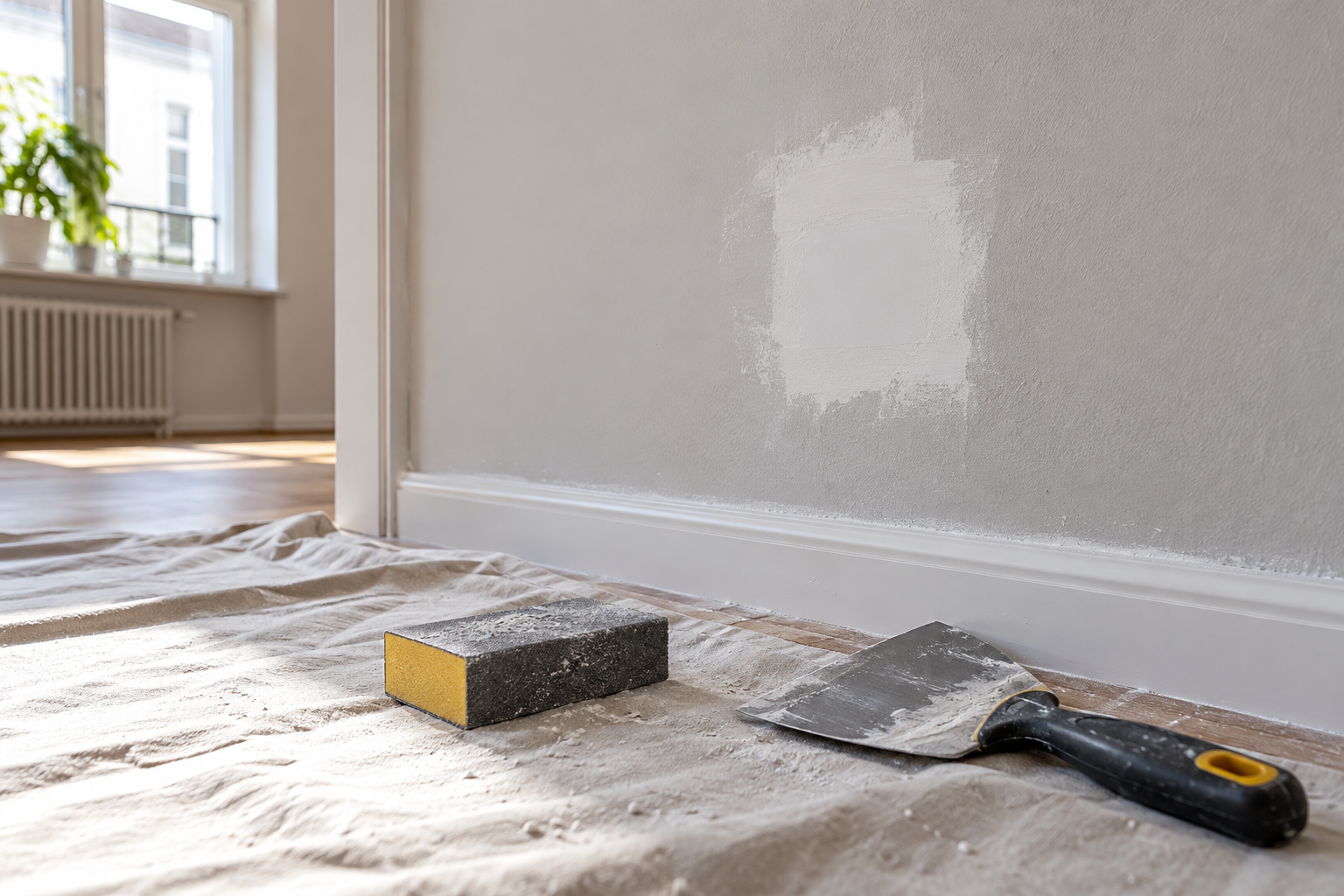
Fill drywall joints and screw heads with the appropriate compound. Once dry, sand smooth and remove dust.
Bare drywall and joint compound absorb paint differently, so a suitable primer helps create a uniform surface.
Paint only after the wall is dry, smooth and dust-free.
Joints and dust
Drywall paper and joint compound can absorb paint differently. Smooth joints and fastener areas, inspect under angled light and remove dust thoroughly. Avoid damaging the paper; torn sections require an appropriate repair method.
Primer and inspection
A primer intended for new drywall helps equalize absorption. Once it dries, inspect joints and depressions again under side lighting and finish any repairs before the topcoat. Extra paint cannot conceal deep joints or uneven compound. Select the roller and sheen with the quality of the prepared surface in mind.
Before coating
- Confirm the surface is dry, sound and free of dust.
- Match repair materials and primer to the substrate.
- Check waiting times for each layer in its own instructions.
Will more paint hide a joint?
Paint cannot flatten a physical irregularity. Inspect under side light, improve the preparation and follow the repair's drying requirements. A shinier coating may make the joint more noticeable.