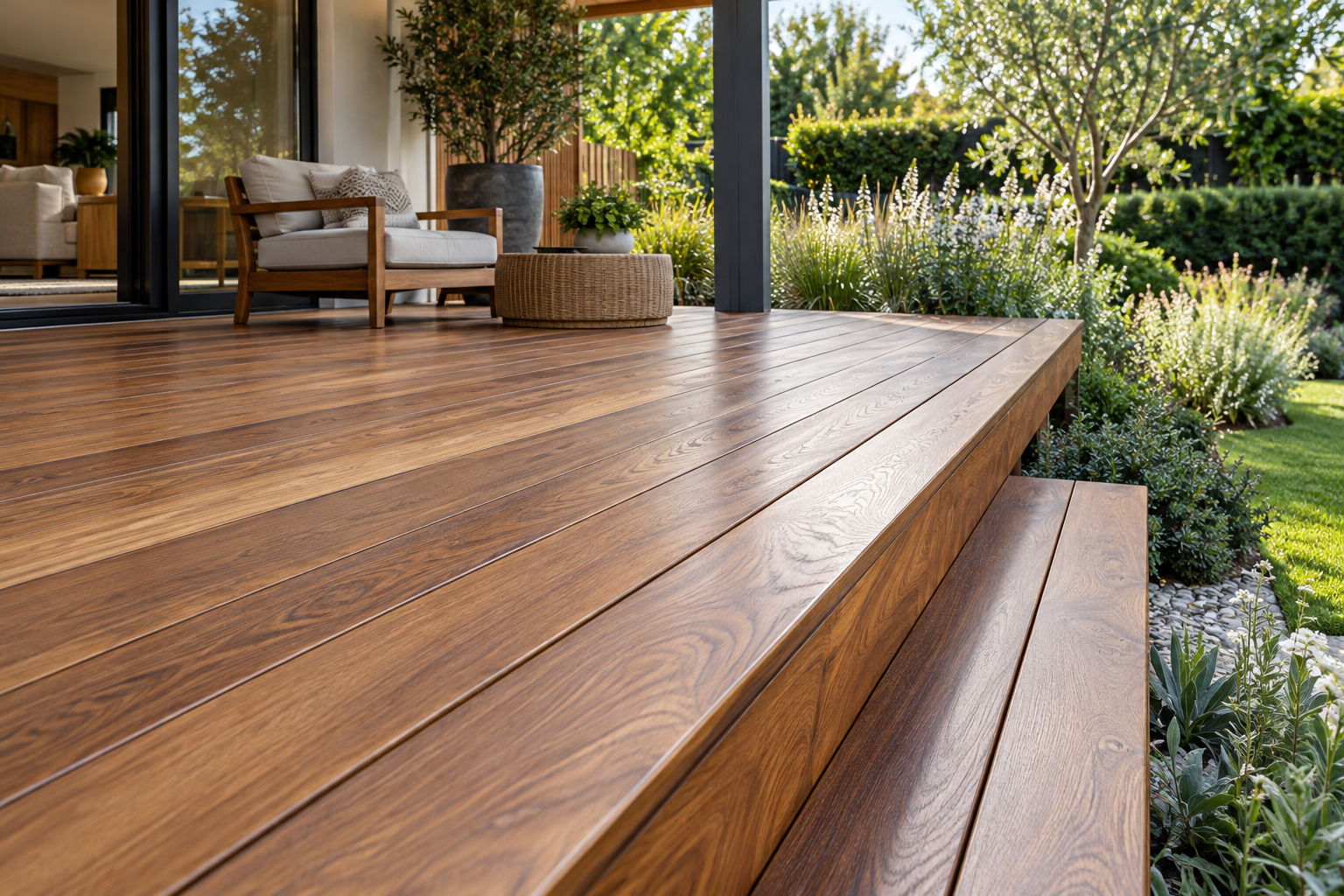
Wood can absorb moisture, swell, discolor and deteriorate. Protect all exposed surfaces where possible.
Choose paint, varnish, oil or another system suited to the environment; exterior wood also needs resistance to rain and UV exposure.
Repair cracks and damaged coatings before water penetrates deeper.
Keep water from accumulating
Timber protection involves more than choosing a coating. Trapped water, exposed end grain, soil contact and poor ventilation increase deterioration risks. Design for drainage and drying. Do not try to seal the problem away by coating wet timber.
Coating and maintenance
Choose for the wood species, previous finish and service location. Prepare clean, dry timber and check requirements for end-grain protection. Inspect exterior surfaces regularly, especially where water sits. Assess UV protection separately for clear finishes: water resistance and protection from sunlight are different properties.
System checklist
- Identify the material and existing finish.
- Distinguish interior and exterior use.
- Read technical and safety instructions, especially cleaning and waste handling.
Does a coating stop all timber movement?
No. Wood can change dimension with moisture. The finish is one part of protection; joints, drainage and ventilation also matter. Inspect cracks and areas where water collects periodically.