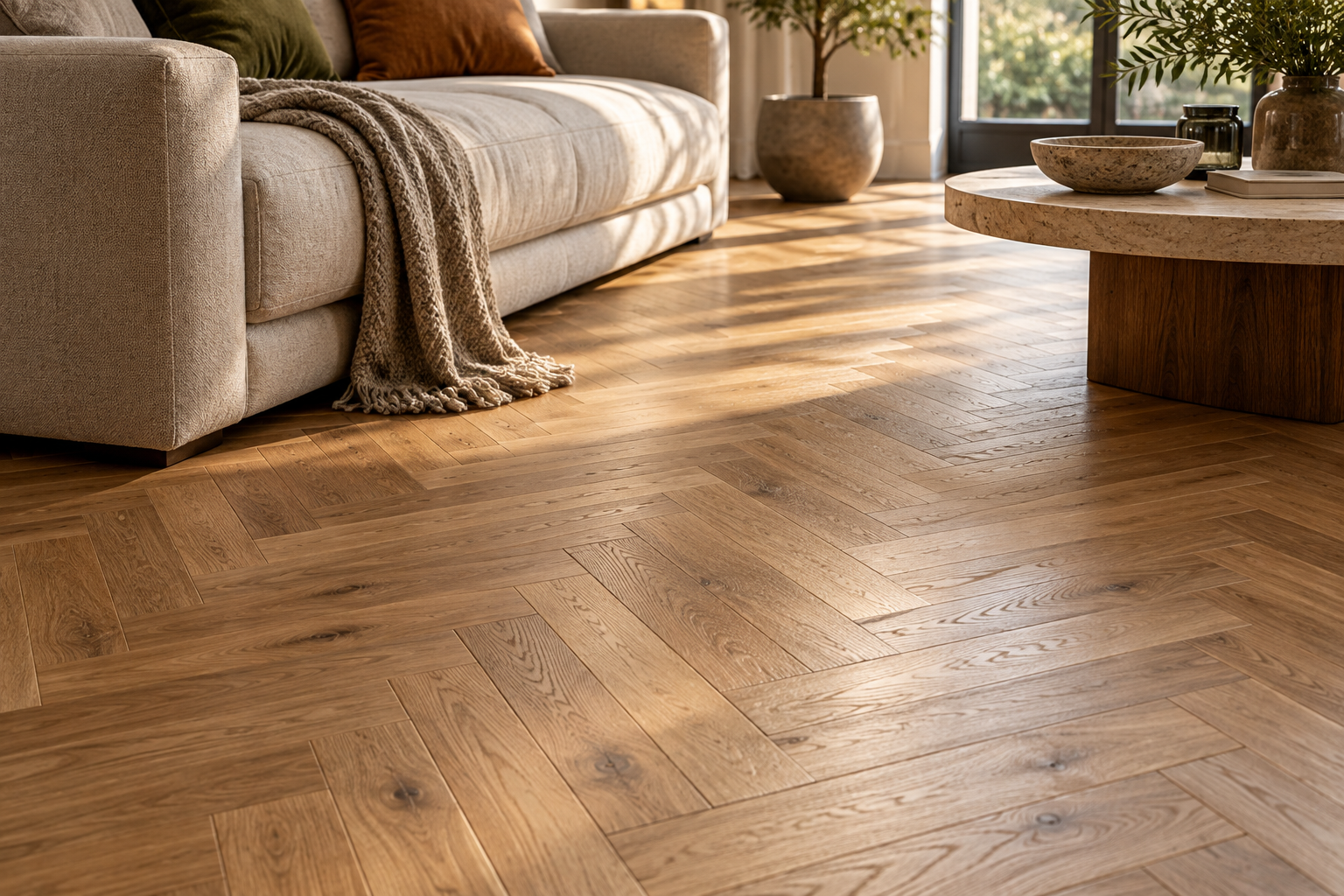
Varnish forms a protective film and helps resist everyday wear, while oil preserves a more natural look and emphasizes the grain.
Some local repairs can be easier on oiled surfaces, while varnished floors may require treatment over a larger area for a uniform finish.
Consider traffic level, maintenance expectations and desired appearance.
Check suitability for flooring
Use a product intended for floors. Varnish forms a surface film; oil systems differ in appearance and renewal methods. Compare cleaning, local-repair and recoating requirements, rather than deciding from sheen alone.
Preparation and return to use
Identify the old finish and perform sanding and cleaning as required by the new system. Trial the color separately. Foot traffic, replacing furniture and laying rugs may have different waiting times; follow the product directions. Excessively thick application can delay curing. Use maintenance products compatible with the chosen finish.
System checklist
- Identify the material and existing finish.
- Distinguish interior and exterior use.
- Read technical and safety instructions, especially cleaning and waste handling.
Are local oil repairs always invisible?
That depends on the product, color and condition of the old surface. Local renewability does not guarantee an exact appearance match. Decide after suitable preparation and a small trial.