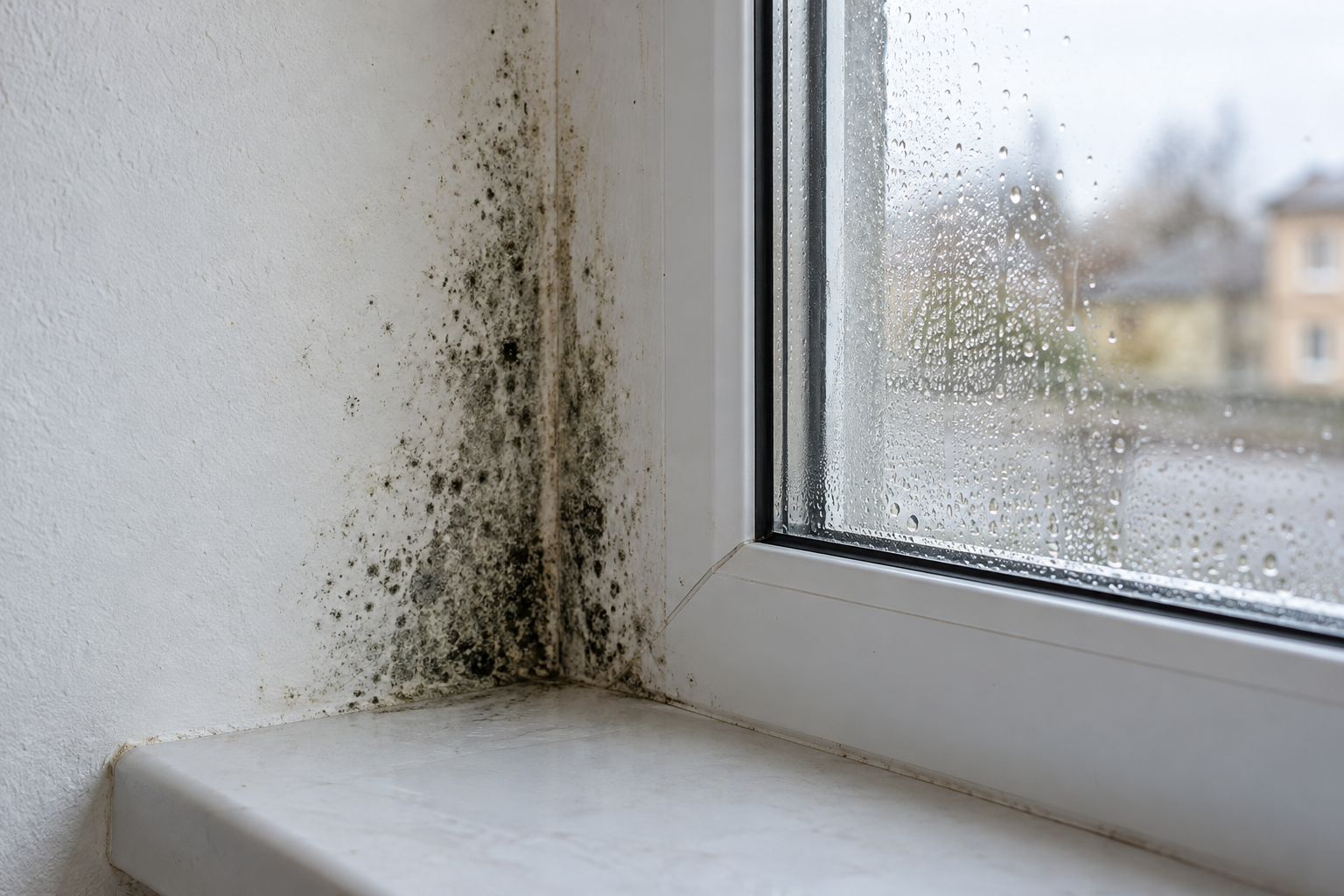
Painting over mold does not solve the problem. The moisture source must be identified and corrected first.
Leaks, condensation and poor ventilation are common causes.
After the cause is addressed, clean and dry the affected area and remove unstable coating before repainting.
Find the moisture source first
Recurring mold often relates to leaks, condensation or poor ventilation; painting over it does not resolve the cause. Distinguish a small surface patch from extensive, concealed or flood-related damage. Extensive growth, contaminated water or health vulnerabilities call for professional assessment.
A safe sequence
Resolve the cause, clean appropriately and dry the substrate. Avoid spreading particles by dry-sanding mold and never mix cleaning chemicals. Paint only a clean, dry, sound surface. Mold-resistant paint does not dry a damp wall. If staining returns, revisit moisture diagnosis rather than adding another coat.
Before correcting the defect
- Assess the defect on a fully dried surface.
- Identify causes of moisture and poor adhesion.
- Trial the selected repair system on a small area.
Can I paint as soon as the mold disappears?
Visible removal alone is not enough. Resolve the moisture source, clean appropriately and dry the substrate. Assess recurring damp or suspected concealed damage before covering the area.