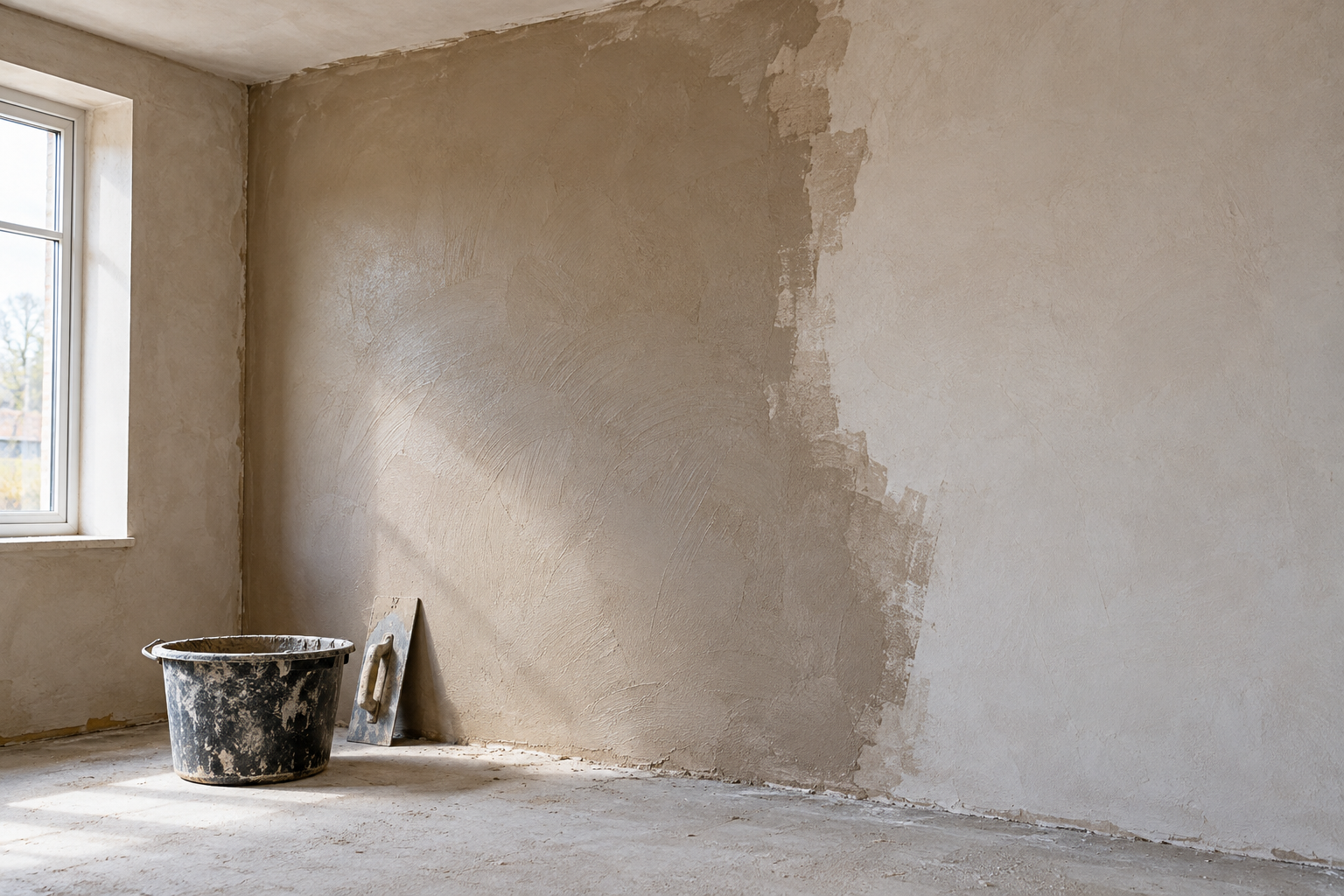
Fresh plaster should not be painted before it has dried properly because trapped moisture can later cause staining, blistering or peeling.
Drying time depends on plaster type and thickness, temperature, ventilation and humidity.
Before painting, the surface should be dry, sound and dust-free, with primer used where appropriate.
Check condition, not just the calendar
Drying and curing depend on the plaster type, thickness, ventilation and humidity. A dry-looking surface does not prove that deeper layers are ready. Check both plaster and paint requirements, using a suitable moisture or surface assessment where needed.
Before painting
Address continuing damp, salt deposits, loose areas and cracks before coating. Prepare the surface and apply the specified primer. A thick repair patch may be ready later than a thin neighboring area. Applying one fixed waiting period to all plaster, or treating rapid heater drying as full curing, can lead to problems.
Before coating
- Confirm the surface is dry, sound and free of dust.
- Match repair materials and primer to the substrate.
- Check waiting times for each layer in its own instructions.
Does a lighter plaster color mean it is ready?
It is a useful observation but not sufficient on its own. Thick areas can retain moisture. Check curing and moisture requirements, especially in a new building or a poorly ventilated room.