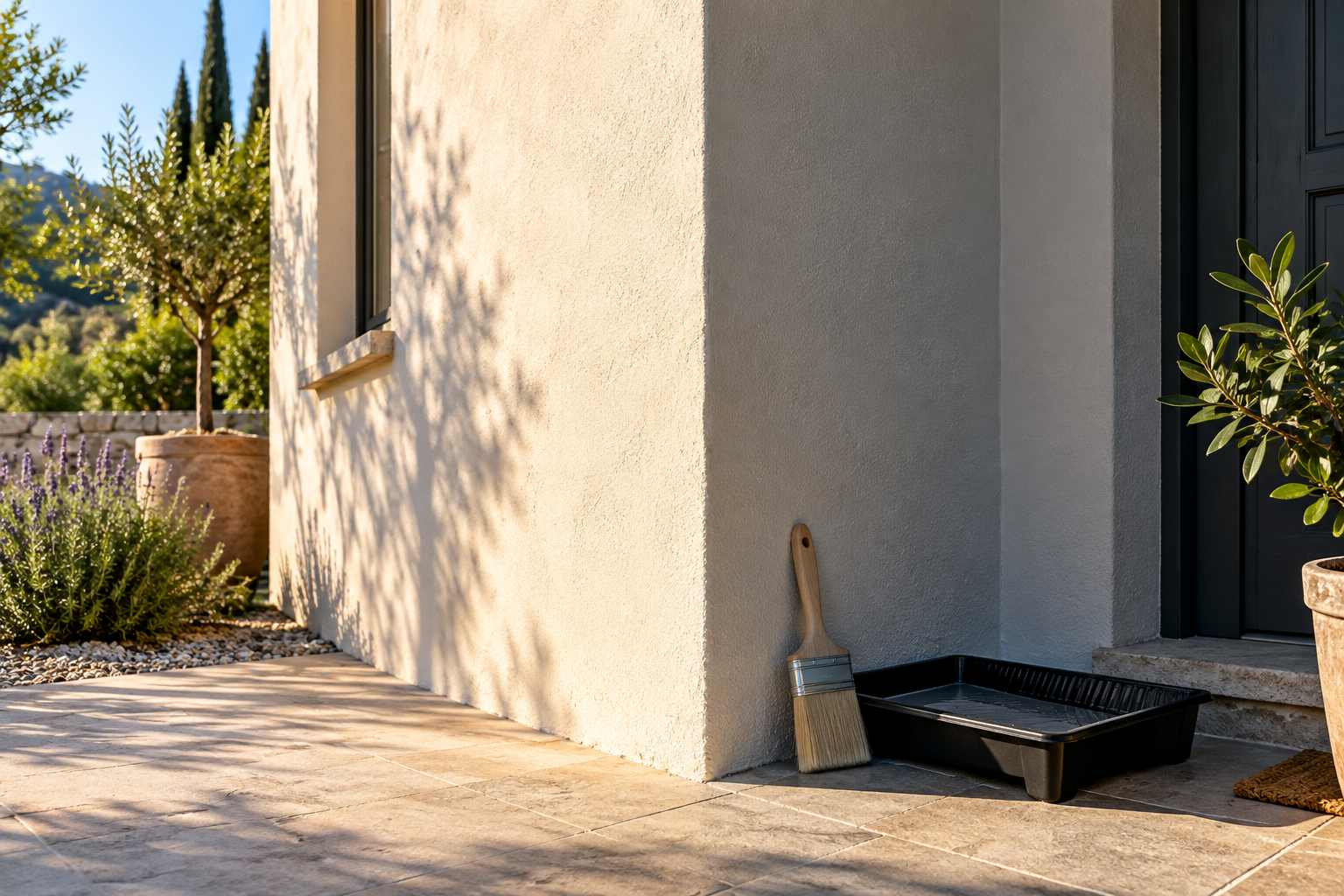
Strong direct sunlight can heat a facade far above the surrounding air temperature, causing paint to dry before it levels properly.
This can lead to brush or roller marks, uneven color and inconsistent film formation.
Work on shaded sections where possible and follow the product’s temperature limits.
What changes on a hot surface
Direct sun can heat the substrate and shorten paint working time, causing fast-drying edges, poor leveling and lap marks. Assess the surface itself even when air conditions seem acceptable. Thinning does not solve every hot-surface problem.
A better plan
Follow the sun around the building and choose shaded sections within the allowed application conditions. Wind and dry air can also accelerate drying. Work in manageable areas and maintain a wet edge. Check that morning dew has cleared: shade does not automatically mean a dry, suitable substrate.
Exterior checklist
- Evaluate weather and surface conditions together.
- Repair leaks, cracks and loose coating before painting.
- Check separate application and protection requirements for primer and finish.
Is fresh shade immediately enough?
A wall can remain hot after the sun moves away. Check surface temperature against the product limits and confirm that it is not damp. Shade alone does not establish suitable application conditions.