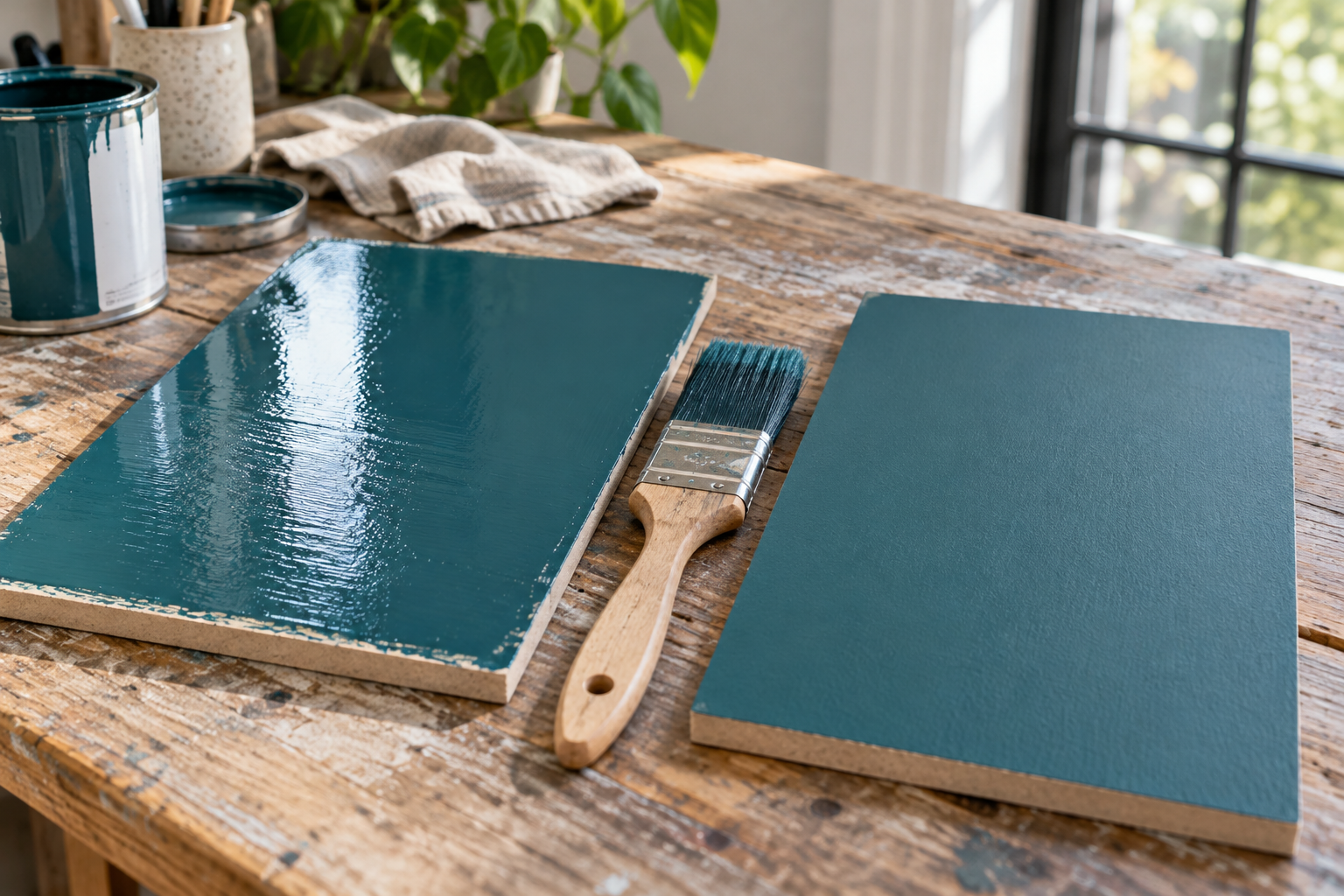
Wet paint reflects light differently from dry paint. As water or solvent evaporates, the coating reaches its final appearance.
Lighting, the previous wall color and sheen can all change how the same shade is perceived.
For the most reliable result, test the color on the actual wall, let it dry completely and view it at different times of day.
How to compare
Apply the same paint with the same tool to two sample areas. With a dark underlying color, check that coverage is complete: a thin film may still show the old color. Compare two fully dried samples rather than a wet patch against a dry one. Record the color code, product and sheen beside each sample.
Example and common mistake
If a beige that looked neutral in the shop seems pink at home, examine it beside the flooring and curtains. Warm lamps and neighboring surfaces can affect its appearance. Before assuming a tinting error, compare the label and a dry sample. A phone photograph is not a reliable color measurement.
Before deciding
- Assess the shade in the actual room under its intended lighting.
- Compare flooring, furniture and textiles beside the sample.
- Record product, color code and sheen together.
Will another can look identical?
Match product and sheen as well as color code. Where appropriate, combine batches as the product instructions allow, and finish a complete wall rather than stopping at an arbitrary point.