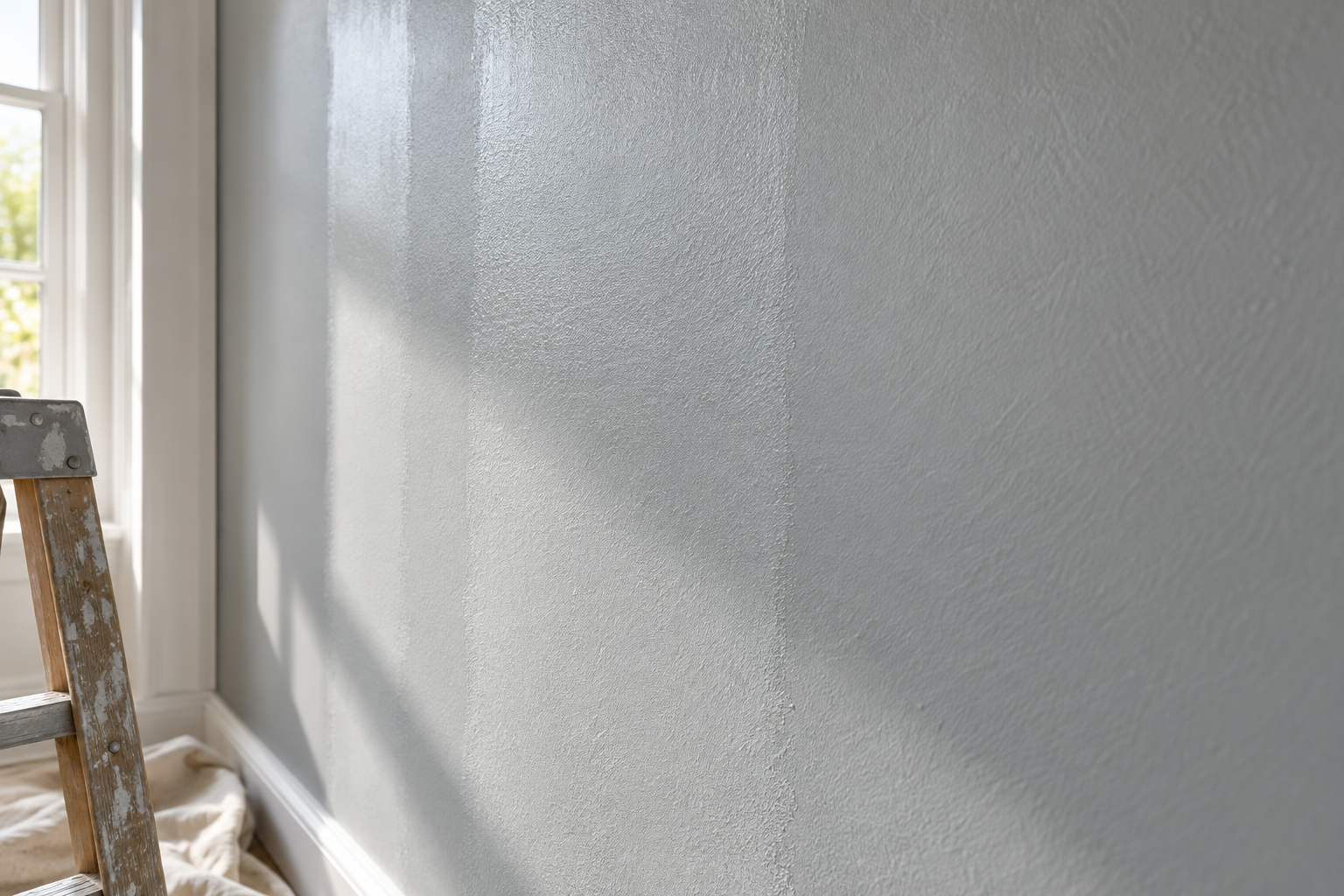
Roller marks can result from excessive pressure, uneven paint loading or rolling back over paint that has started to dry.
Use the correct roller, load it consistently and maintain a wet edge.
If marks remain very visible after drying, light preparation followed by a uniform additional coat may be needed.
Look at the shape of the mark
Raised lines, heavy roller texture and sheen differences need different corrections. Inspect the fully dried wall under side light. Excessive pressure, unsuitable nap, uneven loading and reworking drying paint are possible causes.
Before repainting
Smooth raised defects appropriately and remove dust. Correct absorption differences and substrate issues, then coat the full area with the right roller. Set a pace that maintains a wet edge. Repeatedly spreading wet paint whenever a defect appears, or adding unapproved water, can make the result worse.
Before correcting the defect
- Assess the defect on a fully dried surface.
- Identify causes of moisture and poor adhesion.
- Trial the selected repair system on a small area.
Is a new roller enough?
It may help when the tool is the cause, but existing raised marks still need correction. Check absorption and application conditions too. A different roller does not automatically flatten a physical defect.